
Impulse Wave in Elliott Wave Theory
The Impulse Wave is one of the most important concepts in Technical Analysis and plays a major role in the famous Elliott Wave Theory. Developed by Ralph Nelson Elliott in the 1930s, Elliott Wave Theory explains how financial markets move in repetitive patterns driven by investor psychology and crowd behavior. Among all wave structures, the impulse wave is considered the strongest and most profitable trend movement for traders.
An impulse wave is a five-wave structure that moves in the direction of the main market trend. It reflects strong buying or selling pressure and usually appears during trending markets. Whether in stocks, forex, cryptocurrency, or commodities, understanding impulse waves can help traders identify market momentum, trend continuation, and high-probability trading opportunities.
Fibonacci Retracements Levels and Extension Levels of Impulse
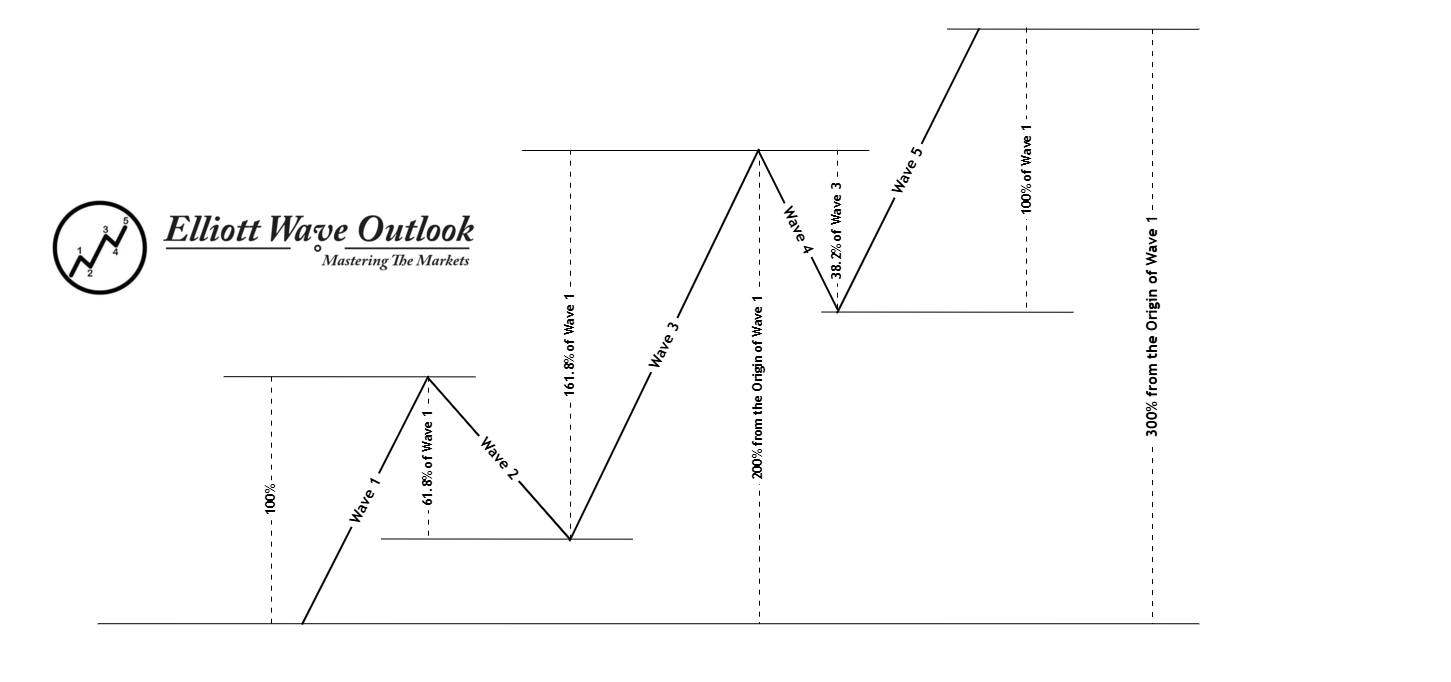
According to the Elliott Wave Principle, a complete motive wave consists of five waves moving in a structured pattern:
- Wave 1: The initial move in the direction of the trend.
- Wave 2: A correction that retraces part of Wave 1.
- Wave 3: Usually the strongest and longest wave with heavy momentum.
- Wave 4: Another correction, often smaller than Wave 2.
- Wave 5: The final push in the trend direction before a larger correction begins.
This five-wave structure forms the core foundation of Elliott Wave Chart Analysis and is widely used in forex trading, stock market analysis, and cryptocurrency forecasting.
Retracements and Extension Levels :
- Wave 1 : Often Slow and tidy Movement
- Wave 2 : 50% or 61.8% of Wave 1
- Wave 3 : 161.8% or 261.8% of Wave 1
- Wave 4 : 38.2% or 50% of Wave 3
- Wave 5 : 100% or 127.2% of Wave 1
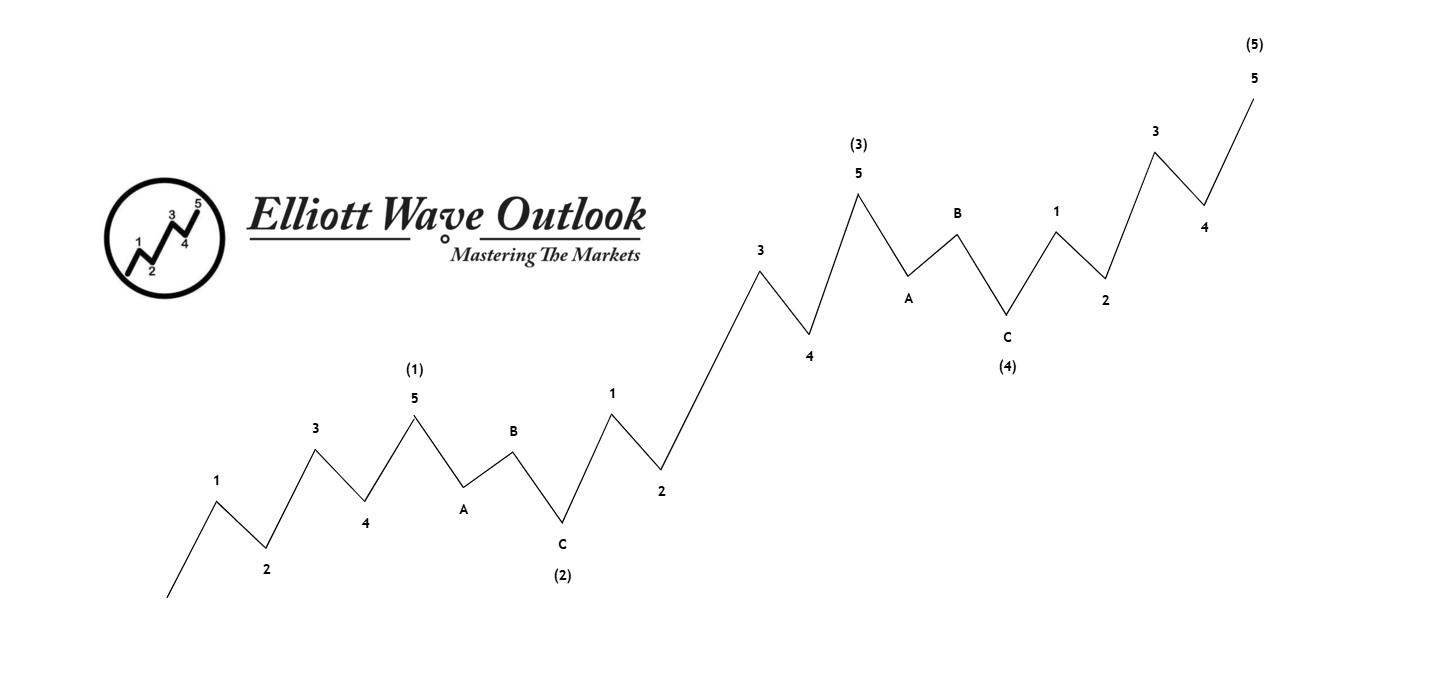
Internal Structure of an Impulsive Wave Pattern (5-3-5-3-5)
Characteristics of Wave 1
- Motive : This is the first movement of the price movement. it is the first breakout of the price movement and reversal in the opposite direction of Trend.
- Confirmation : It is confirmed by the Wave 2 Retracements and it is mostly retraced at 50% or 61.8% of Prior wave 1.
- Internal Structure : The internal structure of the wave 1 should be motive. A sub- division of internal waves should be available as 5-3-5-3-5 pattern. As it is a Motive wave but it may be choppy at start of smaller degree Trend.
- Invalidation : if the next Wave retracement as Wave 2 retrace this wave 1 by 100% or exceeds of origin point of Wave 1.
- Commonly Mistakes : Strong Impulsive move marked as Wave 1 without confirming the retracement of wave 1 as Wave 2.
- Volumes : Initially the volumes will start to increasing in positive Territory.
Characteristics of Wave 2
- Motive : A big Retracement in the opposite direction of Trend. Simply testing the Wave 1 is real or not as a confirmation.
- Confirmation : Wave 2 Should be retraced above the Wave 1 origin point. It Typically retraced at 50% – 61.8% of Wave 1.
- Internal Structure : The internal structure of the wave 2 should be corrective. A sub- division of internal waves should be available as 3 waves corrective pattern. As it is a corrective wave but it may be choppy or aggressive in nature.
- Invalidation : if Wave 2 retraces the origin point of Wave 1 or 100% of Prior Wave in opposite direction.
- Commonly Mistakes : Shallow retracements marked as wave 2 without confirming the retracement ration of 50% – 61.8% of wave 1. And other is marked as Wave 2 if it Exceed the 100% of Wave 1 Length.
- Volumes : Initially the volumes will start to increasing in negative Territory.
Characteristics of Wave 3
- Motive : A big Trend Expansion in middle stage and strongest Wave in Impulse.
- Confirmation : Wave 3 must Exceed the Wave 1 End Point and can not be the shortest Wave among the 3 Motive Impulsive waves as Wave 1, Wave 3 and Wave 5.
- Internal Structure : The internal structure of the wave 3 should be Motive. A sub- division of internal waves should be available as 5 Motive wave Pattern (5-3-5-3-5). As it is a Motive wave hence should be the Most Aggressive wave.
- Invalidation : if Wave 3 does not exceed the ending point of Wave 1 or the Shortest among wave 1, Wave 3 and Wave 5.
- Commonly Mistakes : Wave 3 can not overlap the previous waves. Labelling such waves as Wave 3 is a mistake.
- Volumes : Initially the volumes will start to increasing in Positive Territory. The pullbacks are bought and sold aggressively.
Characteristics of Wave 4
- Motive : A Shallow retracement after the big Expansion.
- Confirmation : Wave 4 never enters in the territory of Wave 1 and typically retraced at 23.6% – 38.2% of Wave 3. I some Deeper correction of Cycle Correction it may retrace up to 50% of Wave 3.
- Internal Structure : The internal structure of the wave 4 should be corrective. A sub- division of internal waves should be available as 3 waves corrective pattern or the complex corrections mostly sideways or as in Alternation of Wave 2.
- Invalidation : if Wave 4 enters in the territory of wave 1 and retraces more than 50% of Wave 3.
- Commonly Mistakes : incorrectly marked as wave 4 if it enters in Wave 1 Territory or retraces more than 50% of Wave 3.
- Volumes : Initially the volumes will start to Decreasing in negative Territory due to profit booking but most committed Traders remains active during the Wave 4 phase for final advance.
Characteristics of Wave 5
- Motive : A Final Advance in the form of Motive and impulsive nature not as strong as wave 3.
- Confirmation : Wave 5 is the final advance of Impulse and mostly expand at 100% of wave 1. In Some Cases as Truncation it may fail to exceed the Wave 3 High.
- Internal Structure : The internal structure of the wave 3 should be Motive. A sub- division of internal waves should be available as 5 Motive wave Pattern (5-3-5-3-5). As it is a Motive wave hence should be the Aggressive wave.
- Invalidation : if Wave 5 showing the nature of corrective patterns, sloppy and overlapping the internal Sub -Waves
- Commonly Mistakes : Labelling the Corrective Pattern as Wave 5.
- Volumes : Initially the volumes will start to increasing in Positive Territory.
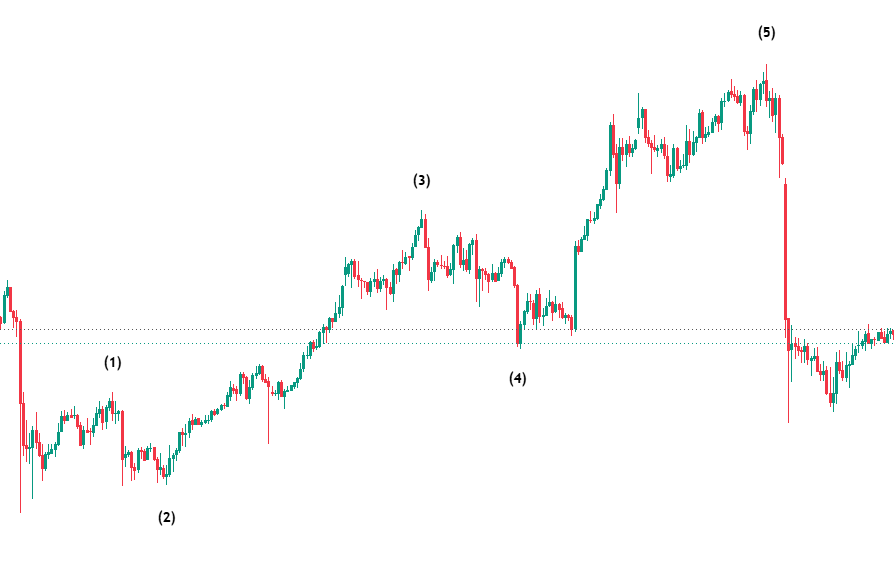
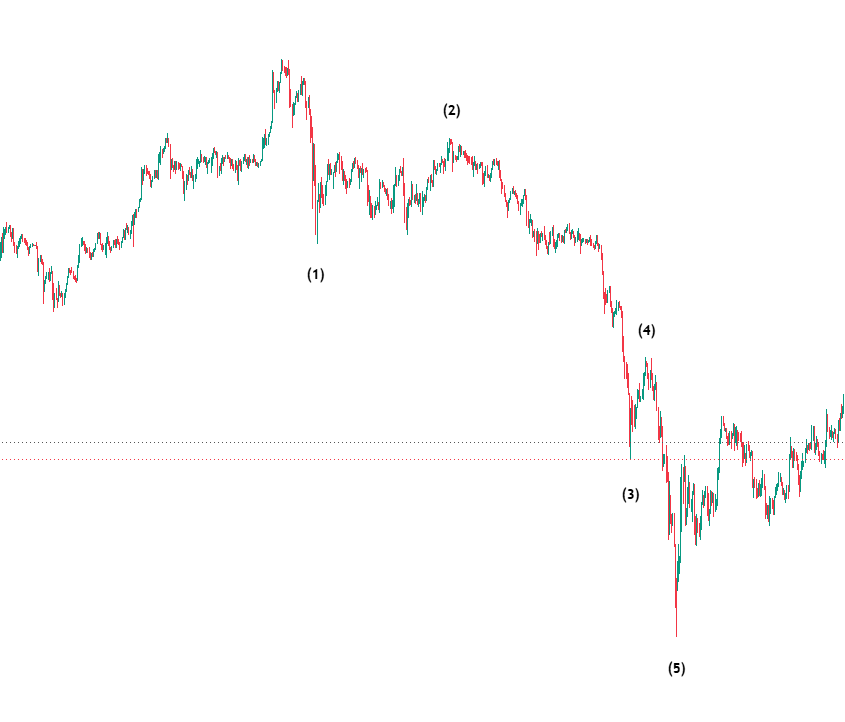
Real Examples of Impulse in Market
How to Trade the Impulsive Waves
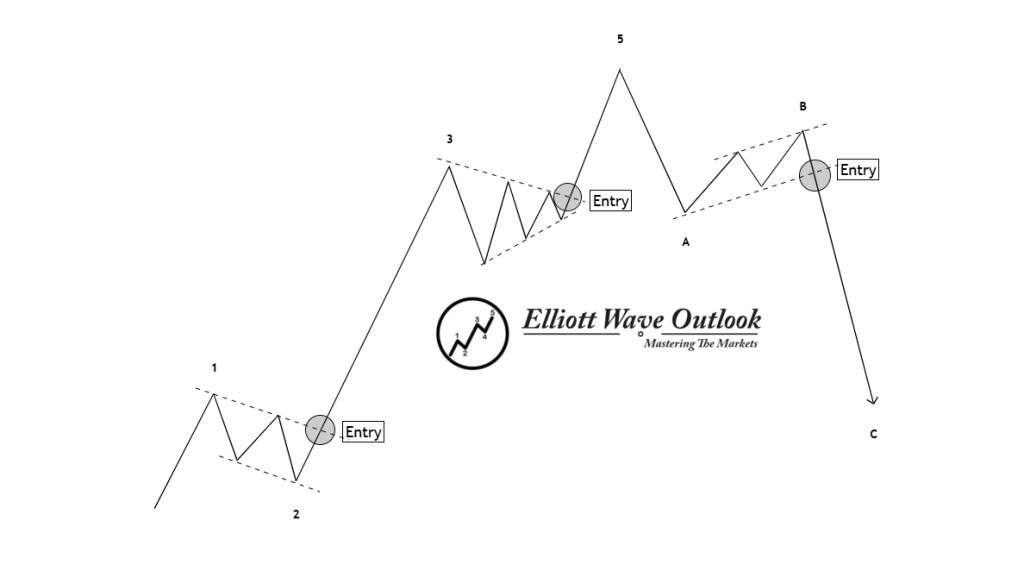
It is Always better and secure to enter in Trade by keeping these rules stated as follows :
To Ride the Wave 3 : To capitalize the strongest wave in Impulse, You should ride the wave 3. It is advised that the perfect entry point for riding the Wave 3 is the intersection point of Wave 1 high and Wave b of Wave 2 Trend line. When The Trend line break is done in wave 3, Then Plan your Entry and Target the Impulse High as Cycle Top. Keep Stop Loss below the origin of Wave 1 with the Target of 261.8% of Wave 1.
To Ride Wave 5 : To Capitalize the last Impulsive Wave 5, Enter at the Breakout of Wave 3 High and Wave b of Wave 4 Trendline breakout. Keep the Stop Loss below the Wave 4 Low with Target of 100% of Wave 1.
To Ride Wave C : To Capitalize the largest Impulse of Bearish move in Corrective form of ABC Pattern, Enter at Wave A low and Wave b of Wave B Trendline breakout. Keep the Stop Loss at the Cycle Top with Target at 61.8% of Cycle Length.
Importance of Impulse Waves in Elliott Wave Theory
Impulse waves are crucial because they indicate the dominant market trend. In Elliott Wave Forex Trading and Elliott Wave Cryptocurrency Analysis, traders look for impulse patterns to enter trades with the trend rather than against it.
The impulse wave helps traders:
- Identify strong market momentum
- Confirm bullish or bearish trends
- Predict future price targets
- Improve entry and exit points
- Combine Fibonacci Elliott Wave levels for accurate analysis
Impulse waves are widely used in the Elliott Wave Stock Market approach because they reflect institutional buying and selling activity. During Wave 3, trading volume often increases significantly, making it one of the best opportunities for trend-following traders.
Impulse Waves in Different Markets
Impulse waves appear in almost every financial market. In Elliott Wave Forex Trading, traders use impulse waves to identify currency trends and breakout opportunities. In Elliott Wave Cryptocurrency Analysis, impulse waves help predict major Bitcoin and altcoin rallies. Similarly, stock traders use impulse waves for long-term investment strategies and short-term swing trading.
Modern traders also use an Elliott Wave Indicator to automate wave counting and simplify chart analysis. These indicators help identify impulse and corrective wave patterns more efficiently.
The impulse wave is the heart of Elliott Wave Theory and one of the most powerful concepts in technical market analysis. Understanding how impulse waves form can help traders recognize trend direction, market momentum, and profitable trading opportunities. From Elliott Wave Prediction to advanced Elliott Wave Trading Systems, impulse waves remain essential for traders across forex, stocks, and cryptocurrency markets.
By mastering impulse wave structures and combining them with Fibonacci analysis, traders can develop a more disciplined and strategic approach to market trading.