
Equality in Elliott Wave Theory : A Powerful Tool for Accurate Market Forecasting
Equality in Elliott Wave Theory is one of the most important concepts used by traders and analysts to identify potential price targets and forecast market movements. The principle of equality helps determine the likely length of future waves by comparing them with previous waves. When combined with Fibonacci Elliott Wave analysis, equality becomes a powerful tool for improving trading accuracy and market timing.
In Elliott Wave Theory, markets move in repetitive wave patterns that reflect investor psychology. These patterns consist of impulsive and corrective waves that unfold across all timeframes. Understanding wave equality enables traders to anticipate where a trend may end and where the next significant market move could begin.
What Is Equality in Elliott Wave Theory?
Equality refers to the tendency of certain waves within an Elliott Wave structure to have similar price lengths. This relationship is most commonly observed between impulsive waves and corrective waves. The concept suggests that when one wave completes, another wave of equal or proportional length may follow.
For example, in a standard five-wave impulse pattern, Wave 5 often equals the length of Wave 1 when Wave 3 is extended. Similarly, in corrective structures such as zigzags, Wave C frequently equals Wave A in both price and time.
This principle provides traders with measurable targets, making Elliott Wave prediction more reliable and objective.
Why Equality Matters in Elliott Wave Analysis?
The concept of equality is essential because financial markets rarely move randomly. Instead, they tend to follow recognizable patterns influenced by crowd psychology. By measuring previous waves, traders can estimate future price objectives and identify areas where trends may reverse.
Benefits of using equality include:
- Improved trade entry and exit points
- Better risk management
- Accurate profit targets
- Enhanced Elliott Wave chart analysis
- Increased confidence in wave counts
Professional traders often combine equality with Fibonacci ratios to create a complete Elliott Wave trading strategy.
Equality in Impulse Waves
In a five-wave impulse pattern, equality is commonly seen in the following relationships:
Wave 1 = Wave 5 : When Wave 3 becomes the extended wave, Wave 5 often travels approximately the same distance as Wave 1.
Wave 1 = 61.8% of Wave 5 : In strong trends, Wave 5 may extend beyond Wave 1, often reaching Fibonacci-based projections.
Wave 3 = 161.8% of Wave 1 : Although not strict equality, this Fibonacci relationship frequently appears in trending markets and helps validate Elliott Wave counts.
These measurements are widely used in technical analysis Elliott Wave methodologies across stocks, forex, commodities, and cryptocurrencies.
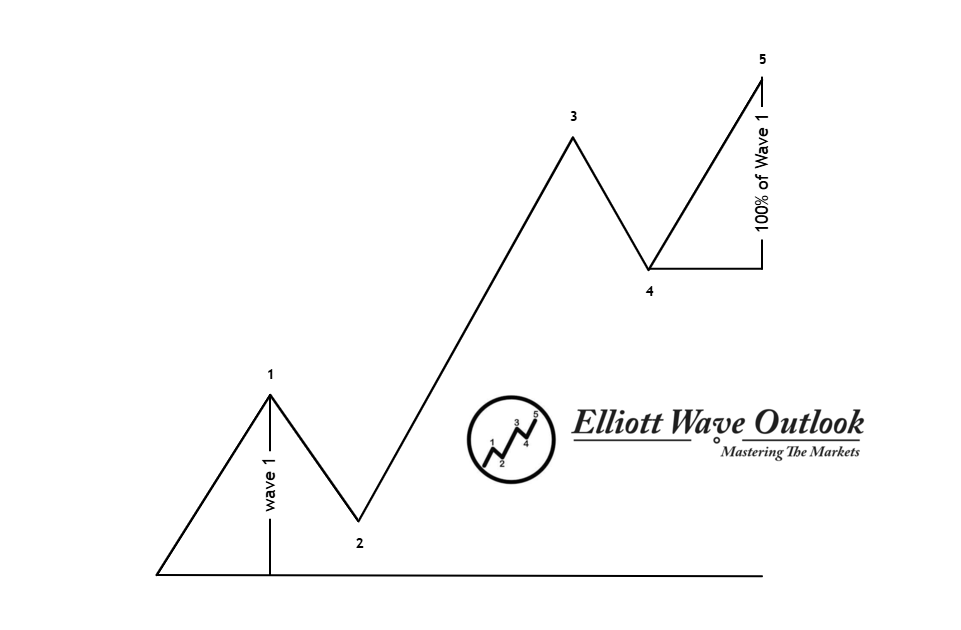
Equality in Corrective Waves
Equality is especially reliable in corrective patterns.
Wave A = Wave C : In a simple zigzag correction, Wave C often matches the length of Wave A. This relationship allows traders to project where the correction may end.
Complex Corrections : Even in flats and combinations, equality remains an important guideline. Analysts use wave measurements to identify completion zones and potential reversal areas.
This makes equality a valuable component of Elliott Wave stock market analysis and Elliott Wave cryptocurrency analysis.
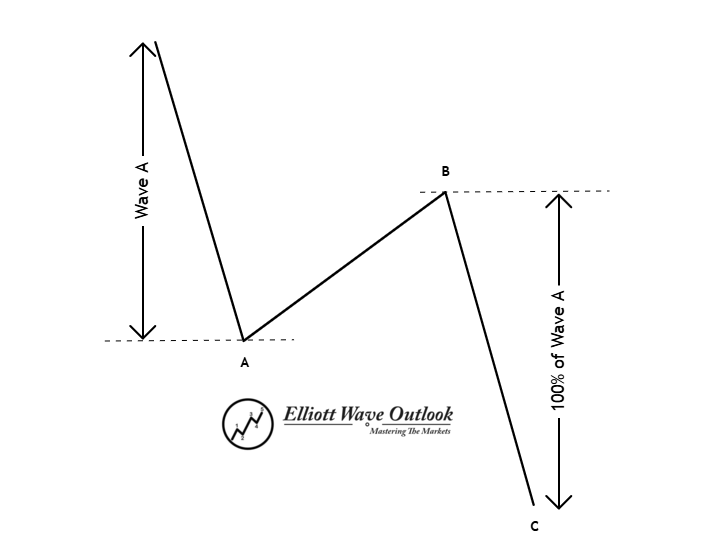
Combining Equality with Fibonacci Ratios
The most effective Elliott Wave forecasts use both equality and Fibonacci projections. Traders typically measure Wave 1 and project equal or Fibonacci-related targets for Wave 5. Likewise, Wave A measurements help estimate the likely termination point of Wave C.
Popular Fibonacci relationships include: 61.8%, 100%, (Equality), 161.8%, 261.8%
These levels create high-probability zones where market reversals often occur.
Practical Trading Applications
Modern trading platforms and Elliott Wave indicators allow traders to quickly measure wave relationships. By applying equality principles, traders can:
- Forecast trend completion
- Identify reversal zones
- Set realistic profit targets
- Improve trade management
- Confirm Elliott Wave Patterns
Whether trading forex, stocks, indices, or cryptocurrencies, equality provides a structured approach to market forecasting.
Equality is a foundational principle of Elliott Wave Principle and plays a critical role in professional market analysis. By comparing the lengths of previous waves, traders can estimate future price movements with greater precision. When combined with Fibonacci Elliott Wave techniques, equality becomes an indispensable tool for identifying opportunities and managing risk.
Mastering equality can significantly improve your Elliott Wave trading system, helping you make more informed decisions and achieve greater consistency in today’s dynamic financial markets.