
Motive Waves in Elliott Wave Theory - for Traders and Investors
Motive Waves are one of the most important concepts in Elliott Wave Theory and play a major role in modern technical analysis. Traders across forex, stocks, and cryptocurrency markets use motive waves to identify strong trends, predict market direction, and improve trading decisions. In today’s highly competitive financial markets, understanding the structure of motive waves can help traders build a profitable Elliott Wave Trading Strategy and gain an advantage in market forecasting.
What Are Motive Waves?
A motive wave is a price movement that travels in the direction of the main trend. In Elliott Wave Analysis, motive waves represent the strongest phase of market momentum because they reflect aggressive buying or selling activity. These waves usually appear during trending markets and indicate that institutional traders and investors are driving prices higher or lower.
According to the Elliott Wave Principle, a complete motive wave consists of five waves moving in a structured pattern:
Wave 1 – Beginning of a new trend
Wave 2 – Temporary correction
Wave 3 – Strongest impulsive move
Wave 4 – Consolidation phase
Wave 5 – Final move before reversal
This five-wave structure forms the core foundation of Elliott Wave Chart Analysis and is widely used in forex trading, stock market analysis, and cryptocurrency forecasting.
Understanding the Structure of Motive Waves
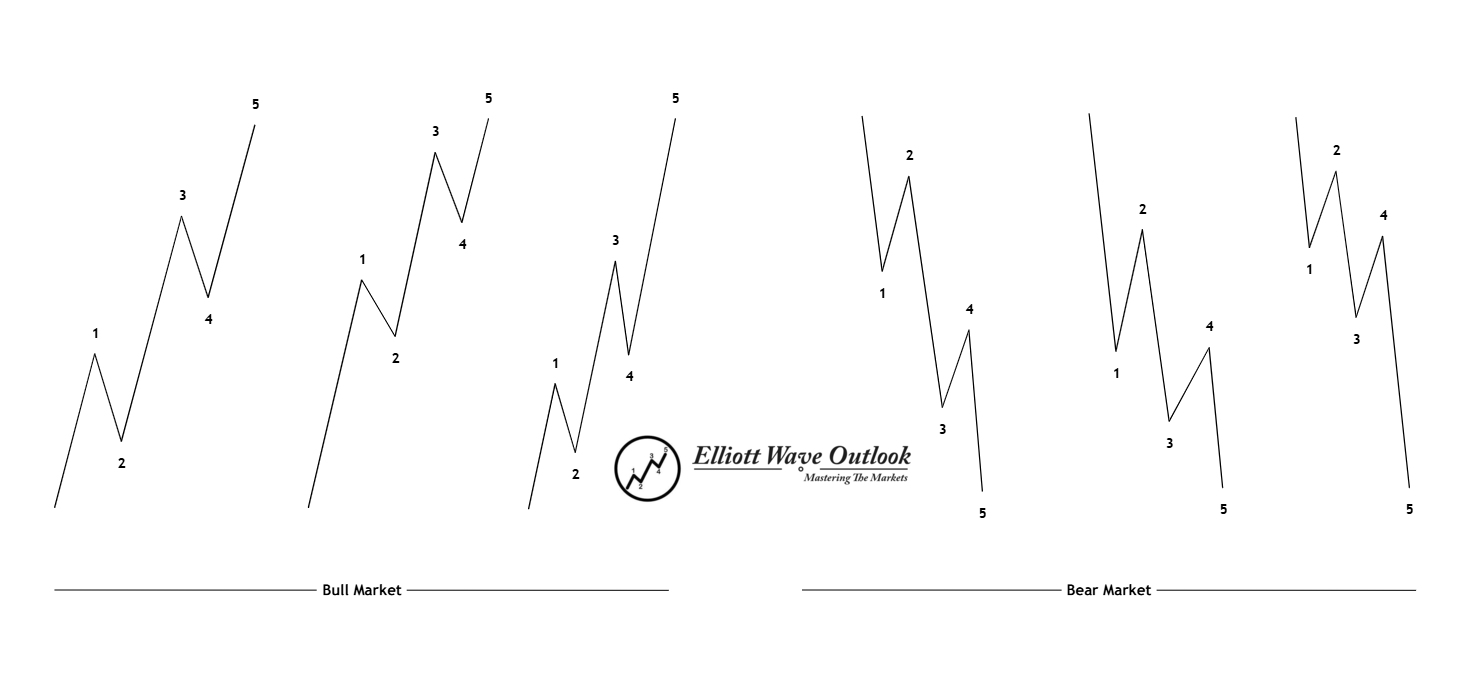
Key Characteristics of Motive Waves
1. Strong Trend Momentum
Motive waves always move in the direction of the dominant market trend. They represent the most powerful price movements in Elliott Wave Forecasting.
2. Five-Wave Pattern
A complete motive wave follows a clear five-wave structure. This pattern is essential in Elliott Wave Explained concepts and advanced trading systems.
3. High Trading Volume
Wave 3 usually experiences the highest trading volume and strongest price acceleration.
4. Fibonacci Relationships
Many traders combine Fibonacci Elliott Wave Analysis with motive waves to calculate retracement and extension targets. Common Fibonacci levels include 38.2%, 50%, 61.8%, and 161.8%.
Cardinal Rules of Motive Waves
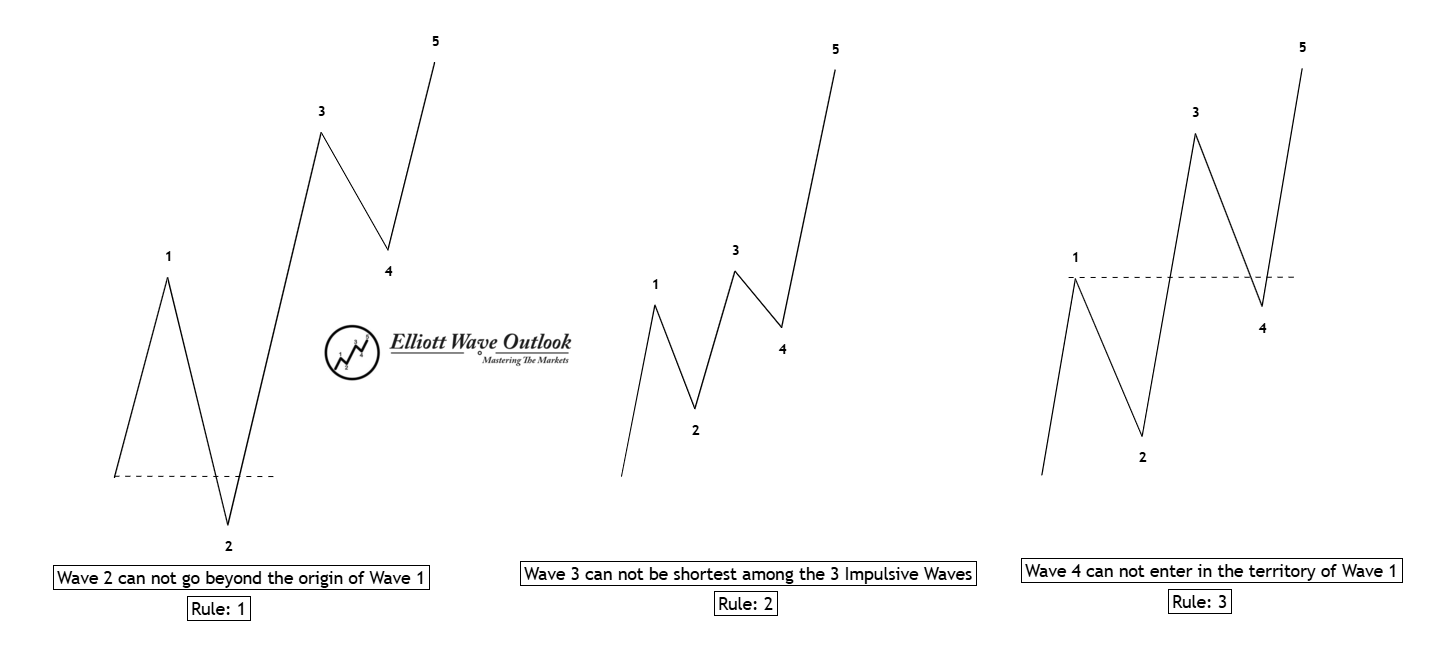
Cardinal Rules for Elliott Waves defines a Valid Impulsive move.
Rule 1 – Wave 2 can not retrace the entire length of Wave 1 and can not pass the origin point of Wave 1.
Rule 2 – Wave 3 can not be shortest among the 3 impulsive moves identified.
Rule 3 – Wave 4 can not enter in the territory of the Wave 1.
Each rule is an invalidation for Wave Counts and if broken then the Wave count if incorrect and needs to be re-analysis.
Select the Topic
Impulse
Impulse Extension
Impulse Truncation
Motive Waves vs Corrective Waves
One of the most important concepts in Elliott Wave Theory is understanding the difference between motive waves and corrective waves. Motive waves move with the primary trend, while corrective waves move against it. Corrective waves usually consist of three-wave patterns and indicate temporary pauses rather than strong directional momentum.
Why Motive Waves Matter in Trading
Motive waves help traders identify trend continuation, entry points, stop-loss levels, and profit targets. By understanding Elliott Wave Patterns and motive wave behavior, traders can improve risk management and increase trading accuracy.
Today, motive waves remain a key component of Technical Analysis Elliott Wave strategies used by professional traders worldwide. Whether you trade forex, stocks, or cryptocurrencies, mastering motive wave analysis can help you better understand market psychology and make smarter trading decisions.